
Author(s)

Publisher

Publication Year

ISBN: 9781989555811

Categories:

 
View more details about this title on the publisher's website:

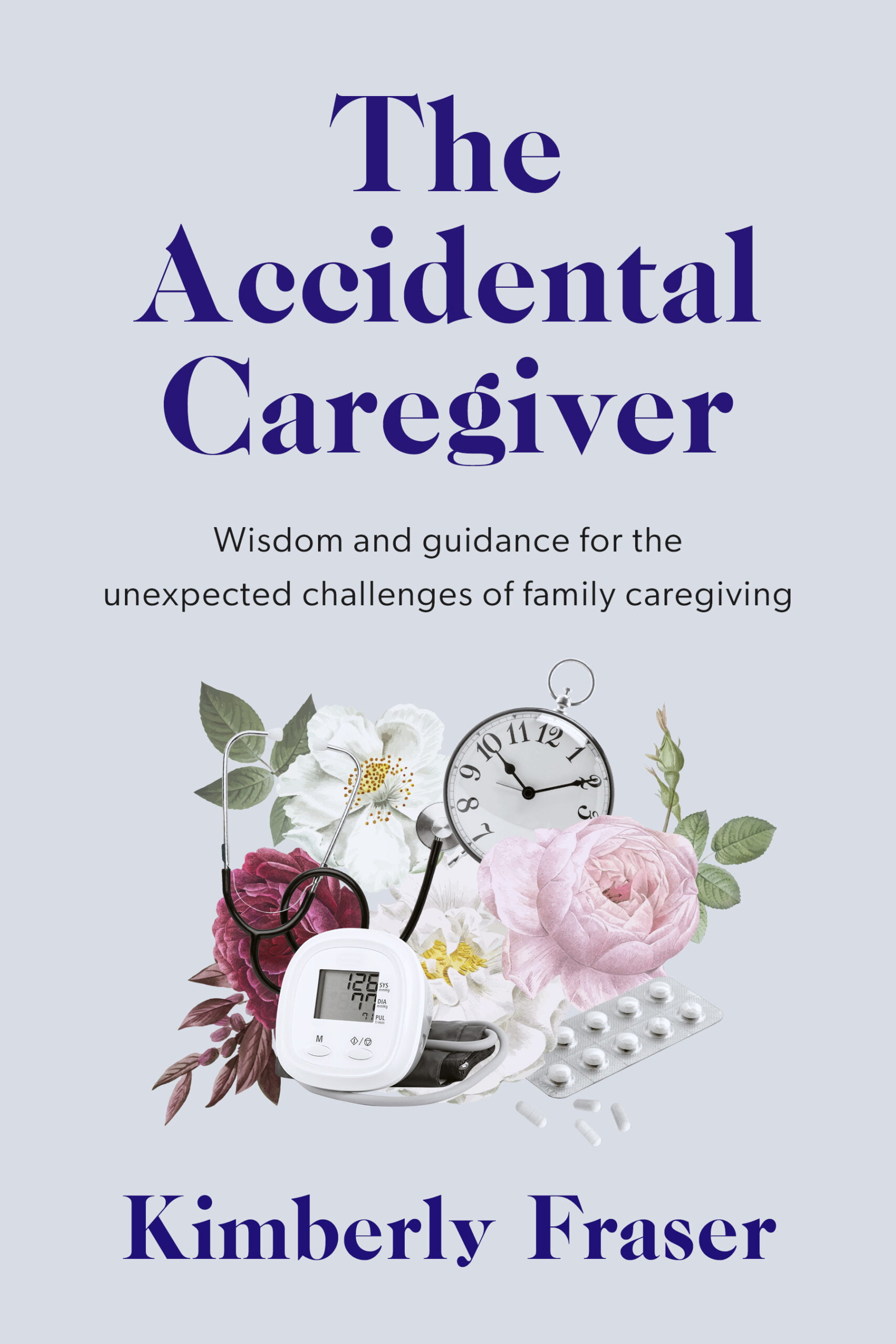
The Accidental Caregiver

Wisdom and guidance for the unexpected challenges of family caregivers

Estimates suggest almost half of the adult population will someday be a caregiver, whether for an aging parent, an ailing partner, or a disabled family member. It is a role that tends to fall on people without warning, and almost certainly without preparation or training. Even Dr. Kimberly Fraser, a nurse who ran a large home support business, found it a struggle when her father needed increasing levels of care. In this timely and urgently needed book, she gives readers sound, practical advice on how to meet with humanity and optimism the bewildering array of challenges facing caregivers: where to find help, how to navigate a confusing healthcare system, how to deal with constant demands, how to keep one’s own life from being overwhelmed by new responsibilities. Based on personal experience, prodigious research, and extensive interviews, The Accidental Caregiver is an invaluable resource for everyone concerned for vulnerable people in their lives and communities.

Contributors

Kimberly Fraser

Kimberly Fraser is an author, speaker, and former Associate Professor at the Faculty of Nursing with the University of Alberta, and Clinician Scientist-Home Care with Alberta Health Services. Asa nursing professor she studies and writes about family caregiving, home care, case management, and related health policy. She has used innovative and arts-based approaches in her applied research. As a former Associate Professor, she now devotes most of her full-time work to writing and community board work.


Chapter Contributors Pages Year Price
The foreword to The Accidental Caregiver, written by Dr. T. Jock Murray of Dalhousie University, examines the unprepared nature of family caregiving and the isolation it produces.
4 $0.40
In this foreword, Fraser examines the growing North American caregiving crisis, where approximately eight million Canadians and sixty-five million Americans provide unpaid care to a loved one.
6 $0.60
In this chapter, Fraser follows a Nova Scotia family’s experience with primary progressive multiple sclerosis, beginning with the father’s diagnosis in 1980.
11 $1.10
In this chapter, Fraser examines resilience as a learnable skill in family caregiving rather than a fixed trait.
17 $1.70
In this chapter, Fraser examines anticipatory grief and the cyclical nature of loss experienced by family caregivers over decades of care.
28 $2.80
In this chapter, Fraser examines the Canadian home care system through the lived experiences of family caregivers.
36 $3.60
In this chapter, Fraser examines how Canadian respite care fails to meet the needs of family caregivers.
12 $1.20
In this chapter, Fraser examines the information gap that family caregivers face when navigating a fragmented and siloed health care system.
29 $2.90
In this chapter, Fraser examines how time pressure shapes the daily lives of family caregivers.
10 $1.00
In this chapter, Fraser examines how the quality of communication shapes the daily experience of family caregivers.
29 $2.90
In this chapter, Fraser examines how family caregivers gradually lose their sense of identity while tending to another person.
17 $1.70
In this chapter, Fraser examines how family caregivers navigate an unprepared, gradual journey.
10 $1.00
In this afterword, Fraser recounts a nurse’s personal experience caring for her husband, Bim, following his aggressive prostate cancer diagnosis in September 2019.
13 $1.30