
Author(s)

;

Publisher

Publication Year

ISBN: 9781770418875

Categories:

 
View more details about this title on the publisher's website:

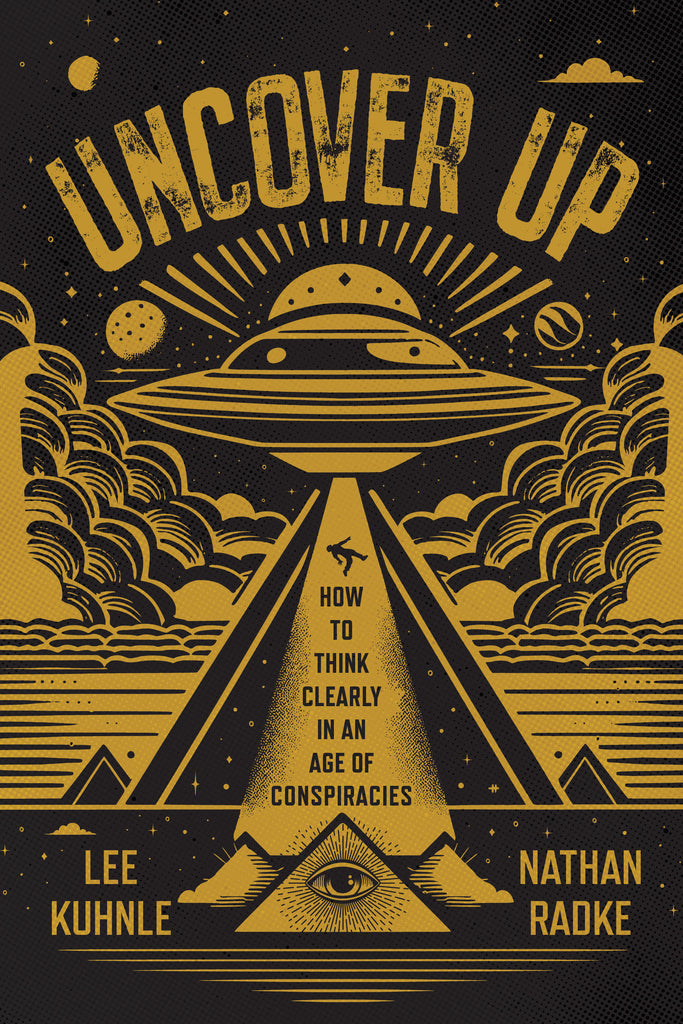
Uncover Up

How to Think Clearly in an Age of Conspiracies

New!

Conspiratorial thinking, mis- and disinformation, and anti-intellectualism are at dangerous levels. With traditional media on the way out, social media algorithms siloing users into personal echo chambers, and generative AI muddying the waters, it’s getting harder and harder to tell news from nonsense. Our ability to think critically about the world around us is being undermined by these forces and many others, which are being used to sow confusion, disrupt democracy, damage the environment, and degrade social well-being. With clear-eyed reasoning and examples that are equal parts fascinating and shocking, Uncover Up: How to Think Clearly in an Age of Conspiracies offers sociological, historical, philosophical, and literary perspectives on conspiracy theories, allowing us to cut through the fog of misinformation. This guide to critical thinking helps us recognize when, how, and why a piece of dubious media is able to shape our worldview or secure our support, ultimately showing us how to critically approach the deluge of questionable claims we encounter every day.

Contributors

Kuhnle Lee

Nathan Radke has degrees in philosophy and sociology from Trent and Lakehead and is the co-author of Ethical Perspectives and several chapters of Conspiracy Theories in American History. He is co-host of The Uncover Up podcast and teaches historical and contemporary conspiracy theories at the post-secondary level and as a regular guest analyst on television and radio. He lives in Toronto, ON.

Nathan Radke

Lee Kuhnle holds a Ph.D. from York University and teaches on the role of ideology in political society with a focus on conspiracy theories and the political impact of conspiratorial beliefs. He teaches at Humber Polytechnic and is co-host of The Uncover Up podcast and a frequent presenter on television and radio. He lives in Toronto, ON.


Chapter Contributors Pages Year Price
In this chapter, Lee and Radke examine how conspiracy theories now shape elections, public health, and climate policy.
; 11 $1.10
In this chapter, Lee and Radke examine how folk psychology, the intuitive understanding of one’s own mind, renders even brilliant minds vulnerable to deception.
; 16 $1.60
In this chapter, Lee and Radke examine how misunderstandings of cause-and-effect give rise to conspiracy beliefs.
; 20 $2.00
In this chapter, Lee and Radke examines how the need for social belonging sustains conspiracy theories, specifically highlighting the anti-vaccine movement.
; 17 $1.70
In this chapter, Lee and Radke examine how digital technology has fundamentally reshaped humanity’s relationship with information, using the FEMA death camp conspiracy as a case study.
; 18 $1.80
In this chapter, Lee and Radke trace the Soviet Union’s deliberate disinformation campaign that falsely attributed the HIV/AIDS epidemic to American research at Fort Detrick.
; 16 $1.60
In this chapter, Lee and Radke examine how moral panics—public overreactions to perceived threats—unfold across history, drawing on Stanley Cohen’s seven-stage model.
; 16 $1.60
In this chapter, Lee and Radke explore how conspiracy theories depend on an absolute notion of evil rather than mere badness.
; 16 $1.60
In this chapter, Lee and Radke examine the link between conspiratorial thinking and millenarian belief, from ancient Egyptian and Zoroastrian dualisms through the book of Revelation to modern …
; 19 $1.90
In this chapter, Lee and Radke examine cognitive dissonance, the psychological friction that arises when beliefs and actions conflict.
; 17 $1.70
In this chapter, Lee and Radke examine how falsifiability, the idea that scientific claims must be testable and potentially disproven, distinguishes genuine science from conspiracism.
; 14 $1.40
In this chapter, Lee and Radke apply a text, context, and subtext framework to false narratives, centring on the American cattle mutilation conspiracy of the 1960s and 1970s.
; 21 $2.10
In this chapter, Lee and Radke argue that the UFO phenomenon functions as a modern mythology, tracing how fictional narratives, government disinformation, and misidentified projects have shaped …
; 18 $1.80
In this chapter, Lee and Radke examine the 1954 Seattle Windshield Epidemic, a mass panic across the Puget Sound region where residents attributed ordinary glass wear to sinister causes, …
; 10 $1.00
This "chapter" includes references and notes.
; 21 $2.10