
Author(s)

; ;

Publisher

Publication Year

ISBN: 9781771136556

Category:

 
View more details about this title on the publisher's website:

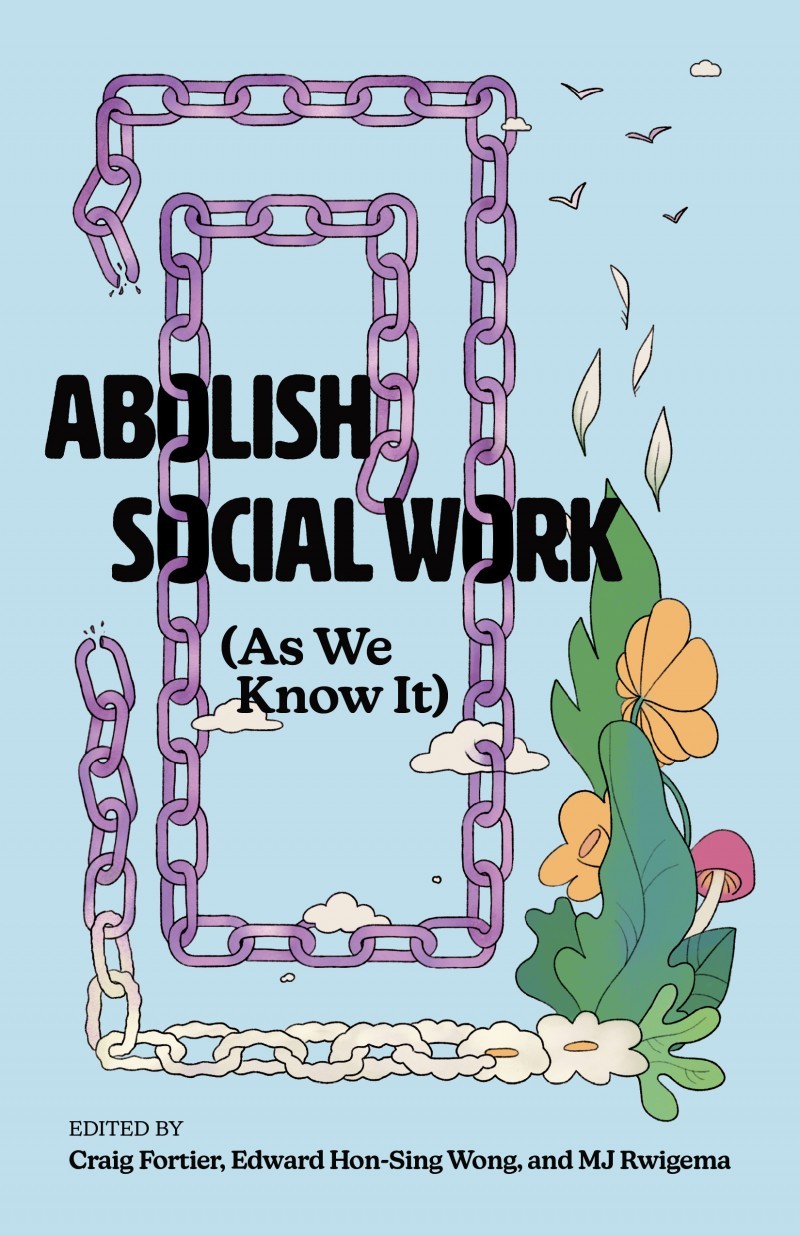
Abolish Social Work (As We Know It)

Abolish Social Work (As We Know It) responds to the timely and important call for police abolition by analyzing professional social work as one alternative commonly proposed as a ready-made solution to ending police brutality. Drawing on both historical analysis and lessons learned from decades of organizing abolitionist and decolonizing practices within the field and practice of social work (including social service, community organizing, and other helping fields), this book is an important contribution in the discussion of what abolitionist social work could look like. This edited volume brings together predominantly BIPOC and queer/trans* social work survivors, community-based activists, educators, and frontline social workers to propose both an abolitionist framework for social work practice and a transformative framework that calls for the dissolution and restructuring of social work as a profession.

Contributors

Craig Fortier

Craig Fortieris a Tkaronto/Toronto based scholar and community organizer. They have worked as a social worker in housing, youth organizing, and non-profit funding organizations while also organizing with migrant justice, queer/trans*, anti-capitalist, and Indigenous solidarity movements. Currently, they are an associate professor in Social Development Studies at Renison University College (University of Waterloo) and are the author of Unsettling the Commons: Social Movements Within, Against, and Beyond Settler Colonialism.

Edward Hon-Sing Wong

Edward Hon-Sing Wong is based in Tkaronto/Toronto. With a background in mental health practice, labour organizing, and community organizing, his work and research centers on social work abolitionism in Canada and Hong Kong, mutual aid, social work and colonialism, institutional violence in the mental health field, and organizing in Chinese communities. He is currently a lecturer at York University’s School of Social Work and a former chair of the Chinese Canadian National Council Toronto Chapter.

MJ Rwigema

Dr. Marie-Jolie (MJ) Rwigema is an assistant professor in Applied Human Sciences at Concordia University in Montreal. MJ’s work draws from twenty years of community practice with Black, racialized, immigrant, and LGBTQ communities. Her work focuses on the interlinkages between resistance, political voice, and recovery from racial trauma. She is the co-director of a SSHRC-RGDI project titled Community-centered knowledges: fostering Black wellness in Montreal and the PI of a SSHRC-Connection project titled Resisting white supremacist violence against Black, Indigenous, and People of Color communities.


Chapter Contributors Pages Year Price
The text interrogates social work’s historical entanglement with colonial, capitalist, and racist frameworks regarding Indigenous sovereignty and Black communities. It further critiques …
; ; 19 $1.90
The text critiques social work’s historical entanglement with capitalism and carceral systems before establishing abolitionist frameworks centered on solidarity rather than punishment. It …
16 $1.60
The text first examines psychiatry’s historical roots in colonial ideology, which scientifically justified racial hierarchies and state-sanctioned harm. Next, it analyzes the systemic …
13 $1.30
First, the chapter critiques carceral infrastructure embedded in healthcare, analyzing how punitive mechanisms specifically target Black women and queer individuals within marginalized …
12 $1.20
This report examines systemic bias within Manitoba Child and Family Services, linking current surveillance practices to historical state-sanctioned violence against Indigenous and racialized …
16 $1.60
This text critiques forensic mental health institutions as carceral spaces prioritizing control over therapeutic healing. It addresses professional ethical compromises and legal mechanisms …
; ; 13 $1.30
This academic overview outlines the theoretical shift from carceral systems toward community-based abolitionist organizing rooted in historical context and grassroots contributions. It examines …
; 11 $1.10
This text critiques antitrafficking discourse by exposing contradictions between feminist abolitionist rhetoric and actual reliance on policing and incarceration. It analyzes how colonial …
12 $1.20
The primary focus integrates abolitionist political theory with social work methodologies, critiquing punitive correctional models that neglect root causes like systemic poverty and racism. …
; ; 12 $1.20
The text critiques professional social work as a mechanism for state surveillance and capitalist extraction within hierarchical structures. It proposes an abolitionist framework replacing …
; 10 $1.00
The text critically interrogates professional identity regarding how roles reinforce state control rather than liberation for marginalized demographics. It defines abolitionism as a cultural …
11 $1.10
This excerpt outlines the epistemological tension between decolonization ideals and pragmatic reliance on carceral institutions for justice regarding Indigenous communities. It contrasts …
; 21 $2.10
This document analyzes structural inequities in Indigenous child welfare, specifically how funding priorities conflate poverty with parental neglect rather than addressing housing scarcity. It …
12 $1.20
The text examines social work’s historical entanglement with colonial policies disrupting language transmission. It critiques institutional models that prioritize bureaucracy over …
15 $1.50
The text examines the organization’s formation during the pandemic, driven by institutional neglect and service closures within specific urban neighborhoods facing isolation. It analyzes …
4 $0.40
The text identifies structural determinants like state planning that create food apartheid and health disparities in marginalized neighborhoods. It examines the historical transition toward …
; ; 12 $1.20
The document identifies three primary topics concerning social work reform. Firstly, it analyzes historical colonial entanglements involving state violence against racialized groups within …
; ; 28 $2.80