
| Author(s) | |
|---|---|
| Publisher | |
| Publication Year |
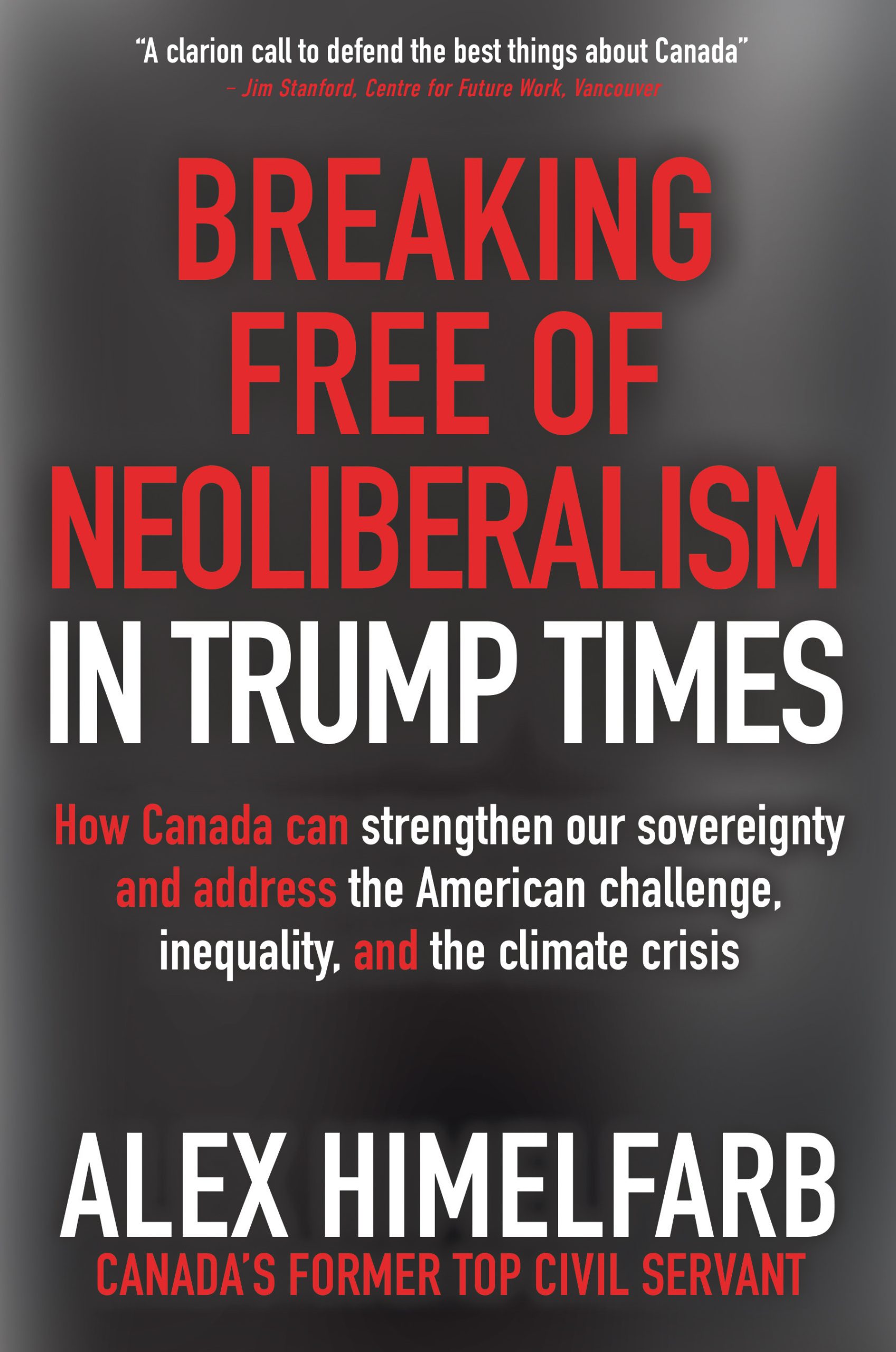
Breaking Free of Neoliberalism in Trump Times
How Canada can strengthen our sovereignty and address the American challenge, inequality and the climate crisis
As the world reels from the turmoil of American politics, former senior bureaucrat Alex Himelfarb addresses the challenges facing Canadians after decades of neoliberal thinking have undermined the capacity of governments to protect and support their citizens. Himelfarb offers an insider’s account of how the neoliberal ideas of Ronald Reagan and Margaret Thatcher were first brought to Canada by Brian Mulroney and Paul Martin.
In 2025, Canadians opted for the unifying message of Mark Carney and Elbows Up, and Carney’s speech at Davos in early 2026 recognized that we need a whole new approach to the world’s politics and economics. Yet in a series of rapid decisions, his government has quietly reinforced the neoliberal agenda of unregulated industries, growing inequality, and limited action on climate change. Gaining a majority in mid-2026, the Carney government was free to pursue economic growth to achieve greater independence from US-Canada ties. Yet this single-minded agenda misses much of what Canadians expect and need from their federal government.
Contributors
Alex Himelfarb
Alex Himelfarb is an academic and civil service legend having spent almost 30 years serving in various departments. He was appointed Clerk of the Privy Council and Secretary to the Cabinet in 2002, serving three Prime Ministers. A former Ambassador of Canada to the Italian Republic with concurrent accreditation to the Republic of Albania, the Republic of San Marino, and High Commissioner to the Republic of Malta. He taught at the University of New Brunswick for a decade before joining the public service and was Director of the Glendon School of Public and International Affairs at York University from 2009 to 2014. He has chaired and sat on numerous non-governmental boards, including the Canadian Alliance to End Homelessness, the Atkinson foundation, the Canadian Center for Policy Alternatives and the World Wildlife Fund Canada. Ever involved he splits his time between Ottawa and Toronto with his wife, three children and faithful Australian labradoodle.