
Author(s)

Publisher

Publication Year

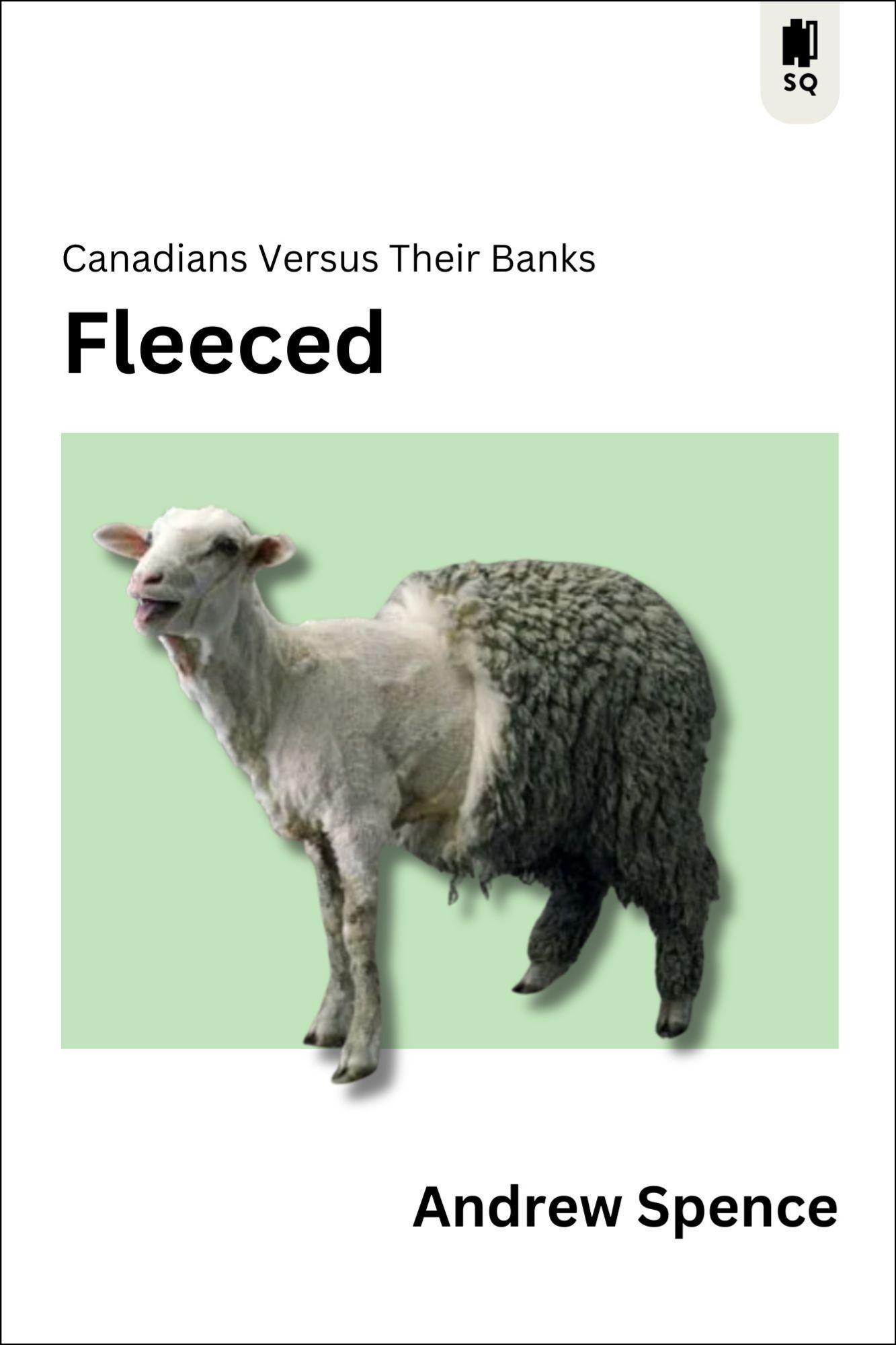
Fleeced

Canadians Versus Their Banks

These are just a few of the many ways chartered banks abuse their dominant position in the Canadian financial system. Fleeced: Canadians Versus Their Banks is a stunning exposé of the inner workings of our six major banks, demonstrating how they are set up to avoid competing with one another, squeeze their customers, evade risk, stifle innovation, and produce staggering profits that enrich bank executives and shareholders—all to the detriment of the broader Canadian economy.

Contributors

Andrew Spence

Andrew Spence is an independent financial consultant and economist. Andrew has extensive experience in banking from time spent in Canadian and global banks. He was also an investment executive at two of Canada’s largest pension plans and was Special Adviser to the Governor of the Bank of Canada.


Chapter Contributors Pages Year Price
In this chapter, Spence examines how Canada’s six federally chartered banks overcharge consumers and underserve small and medium-sized businesses.
8 $0.80
In this chapter, Spence examines the structure and performance of the Canadian banking system, arguing that its concentrated market grants a few large institutions outsized power over rates and fees.
10 $1.00
In this chapter, Spence examines Canada’s banking industry as an oligopoly, drawing on figures such as Ed Clark, who led TD Bank between 2002 and 2015, and Victor Dodig of CIBC, to explain …
11 $1.10
In this chapter, Spence examines how Canadian credit card interest rates have stayed high from the early 1980s through 2024, even as the prime rate fell from 22.75 to 6.95 percent.
6 $0.60
In this chapter, Spence examines how Canada’s mortgage lending became concentrated among a handful of chartered banks, with CMHC insurance enabling lower down payments while leaving …
10 $1.00
In this chapter, Spence examines Canada’s wealth management industry and the high fees embedded in bank-run mutual funds.
11 $1.10
In this chapter, Spence traces Canadian banking consolidation, from the founding of the Canada Banking Company in 1792 to the present-day dominance of the "big six" institutions.
12 $1.20
In this chapter, Spence examines Canada’s navigation of the 2008–2009 global financial crisis, triggered by the collapse of Lehman Brothers on September 15, 2008.
10 $1.00
In this chapter, Spence explains how Canada’s banking sector has remained oligopolistic since the 1964 Porter Commission and 1967 Bank Act reforms.
10 $1.00