
| Author(s) | |
|---|---|
| Publisher | |
| Publication Year |
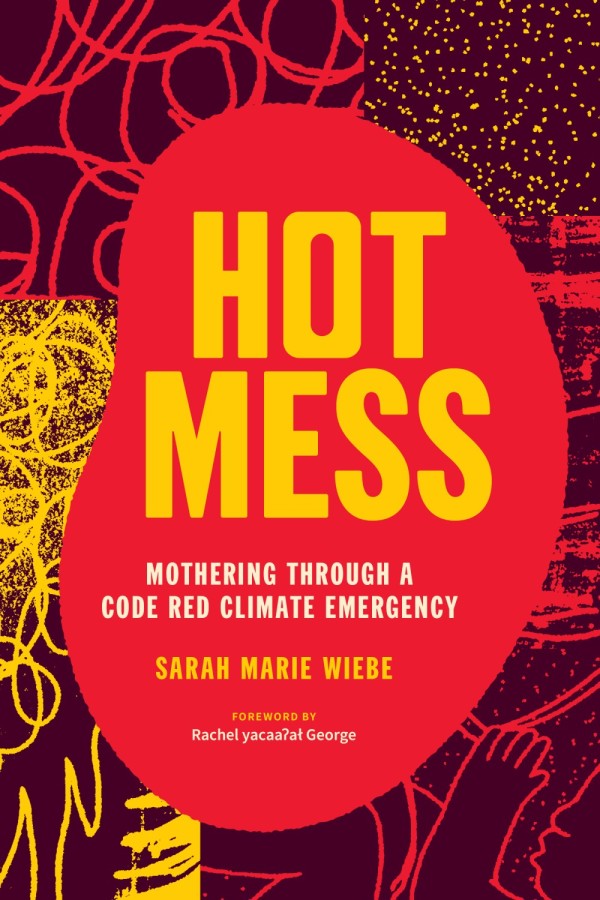
Hot Mess
Mothering Through a Code Red Climate Emergency
No longer is the climate emergency purely an external threat to our wellbeing: this profoundly political circumstance is deeply personal. The summer after giving birth, Sarah Marie Wiebe and her baby endured the 2021 heat dome in British Columbia, with temperatures over 20 degrees above normal, creating all-time heat records across the province. It was the deadliest weather event in Canadian history. The extreme heat landed Wiebe in the hospital, dehydrated and separated from her nursing baby from dawn until dusk. So began a year of mothering through heat, fires and floods. The climate emergency’s many incarnations shaped Wiebe’s politics of parenting and revealed the layers, textures and nuances of the disastrous emergencies we encounter in a world dominated by extractive capitalism.
Contributors
Sarah Marie Wiebe
Sarah Marie Wiebe grew up on Coast Salish territory in British Columbia, BC. She is an assistant professor in the School of Public Administration at the University of Victoria and an adjunct professor at the University of Hawai'i, Mānoa with a focus on community development and environmental sustainability. She is a co-founder of the FERN Collaborative (Feminist Environmental Research Network) and author of Life against States of Emergency: Revitalizing Treaty Relations from Attawapiskat. Her book Everyday Exposure: Indigenous Mobilization and Environmental Justice in Canada's Chemical Valley won the Charles Taylor Book Award and examines policy responses to the impact of pollution on the Aamjiwnaang First Nation's environmental health. She is a co-editor of Biopolitical Disaster and Creating Spaces of Engagement. Her teaching and research interests emphasize political ecology, policy justice and deliberative dialogue. As a collaborative researcher and community filmmaker, she incorporates mixed media storytelling into her sustainability-focused research and teaching.