
Author(s)

Publisher

Publication Year

ISBN: 9781770866812

Categories:

 
View more details about this title on the publisher's website:

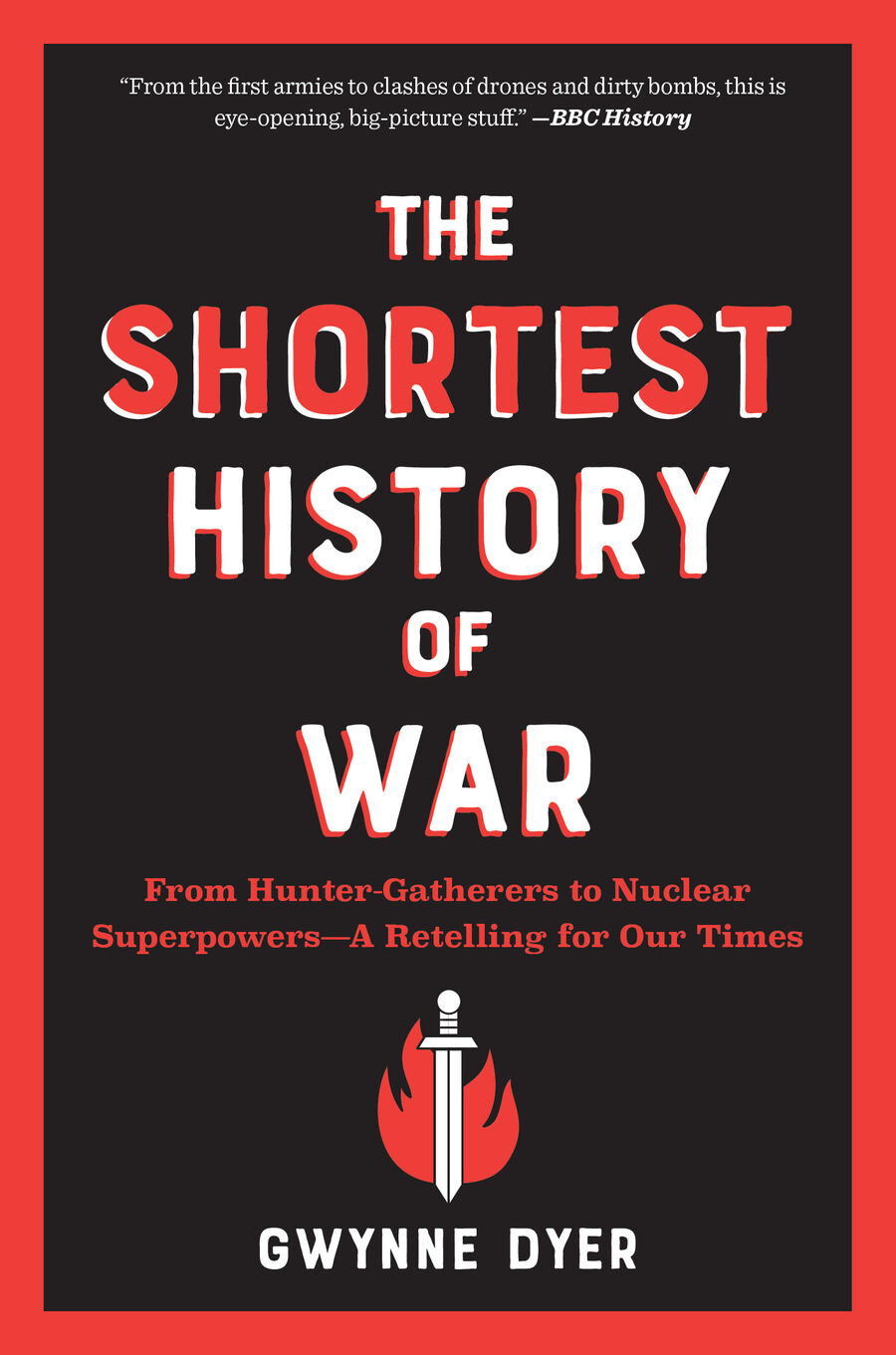
The Shortest History of War

From Hunter-Gatherers to Nuclear Superpowers—A Retelling for Our Times

War has changed, but we have not. From our hunter-gatherer ancestors to the rival nuclear powers of today, whenever resources have been contested, we’ve gone to battle. Acclaimed historian Gwynne ­Dyer illuminates our many martial clashes in this brisk account, tracing warfare from prehistory to the world’s first cities — and on to the thousand-year “classical age” of combat, which ended when the firearm changed everything. He examines the brief interlude of “limited war” before eighteenth-century revolution ushered in “total war”— and how the devastation was halted by the nuclear shock of Hiroshima.


Contributors

Gwynne Dyer

Originally from St. John's, NL,

Gwynne Dyer is an admired journalist, columnist, broadcaster, and lecturer on international affairs. His documentary television series on the history of war was nominated for an Academy Award; his twice-weekly column on international affairs appears in 175 newspapers in 45 countries and is translated into more than a dozen languages. He is currently based in London, UK.

Chapter Contributors Pages Year Price
In this foreword, Dyer examines the declining human cost of conflict since 1945 alongside emerging threats from climate change.
4 $0.40
In this chapter, Dyer traces warfare back millions of years through chimpanzee conflicts in Gombe, Kenya, and archaeological remains at Nataruk.
17 $1.70
In this chapter, Dyer examines the psychological and moral dimensions of combat across generations.
27 $2.70
In this chapter, Dyer traces the evolution of organized warfare from 3500 to 1500 BCE.
20 $2.00
In this chapter, Dyer surveys classical warfare from roughly 1500 BCE to 1400 CE, a period when military technology stabilized and combat became ritualised.
20 $2.00
In this chapter, Dyer traces the evolution of European warfare from 1400 to 1790, focusing on how absolute monarchies reshaped armies through infantry formations, firearms, and mercenary forces.
19 $1.90
In this chapter, Dyer traces the transformation of European and American warfare from 1790 to 1900.
17 $1.70
In this chapter, Dyer traces the development of total warfare from the trench stalemate of 1914 to the atomic bombing of Hiroshima in 1945.
26 $2.60
In this chapter, Dyer traces the evolution of nuclear strategy between 1945 and 1990.
24 $2.40
In this chapter, Dyer examines the three distinct forms of warfare post-1945: nuclear, conventional, and terrorist.
36 $3.60
In this chapter, Dyer explores whether warfare can be abolished through evolving international cooperation.
24 $2.40
In this chapter, Dyer examines how the Russia-Ukraine conflict indicates Russia’s decline from great-power status.
3 $0.30
This "chapter" includes references and index.
21 $2.10