
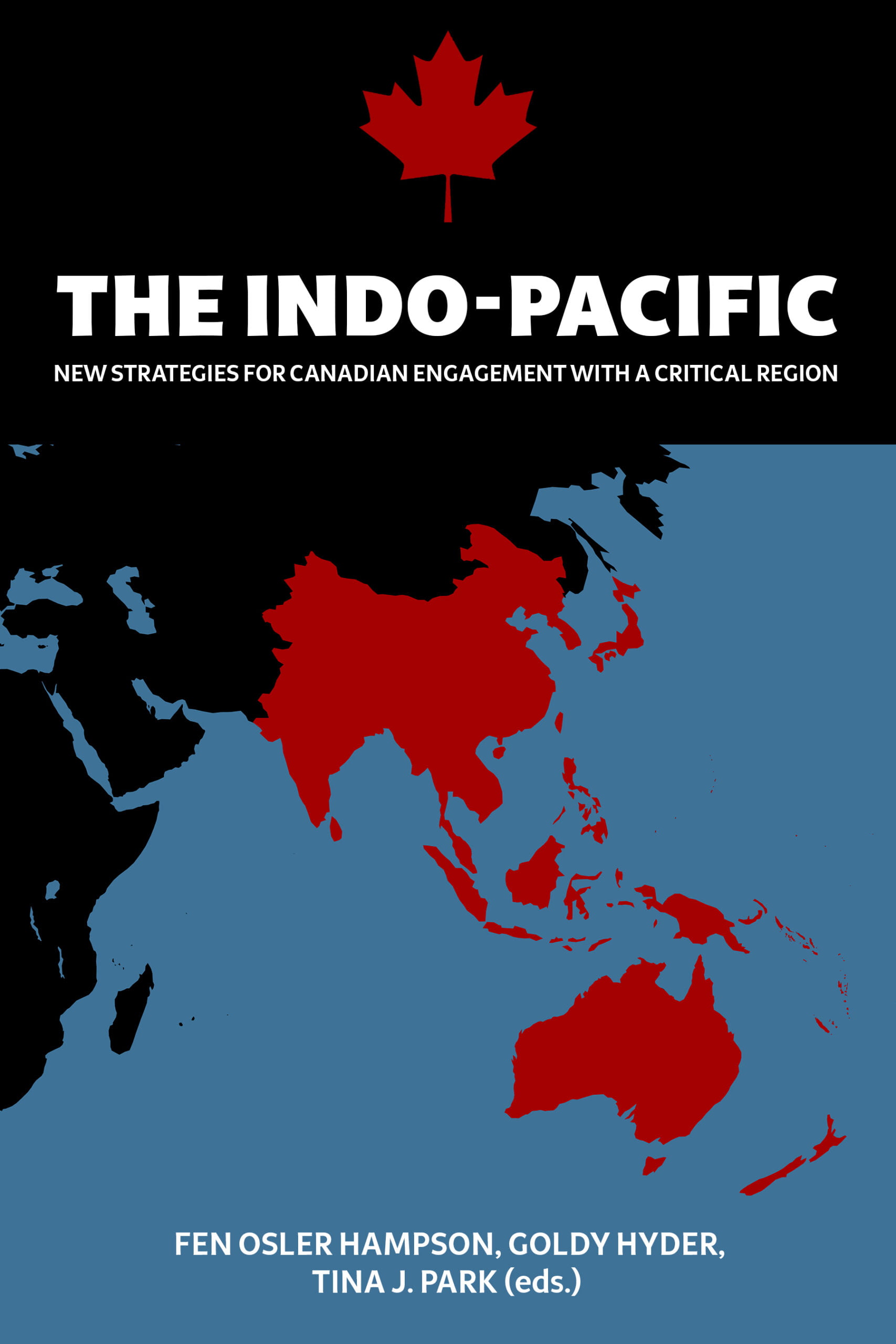
The Indo-Pacific

New Strategies for Canadian Engagement with a Critical Region

The Indo-Pacific region is home to 60 percent of the world’s population and accounts for roughly 60 percent of global GDP. It should figure prominently in any discussion of trade and foreign policy in Canada, home to many significant Indo-Pacific diaspora populations, yet Canadian relations with the countries of the region are under-developed and our businesses under-perform in their markets. The Indo-Pacific: New Strategies for Canadian Engagement with a Critical Region makes the case for a renewed Canadian effort in this vast, diverse, and dynamic part of the world. Its panel of distinguished authors—policy makers and business leaders with direct experience Indo-Pacific—identify key priorities and opportunities and provide a comprehensive road map for a substantive and sustained presence in the region.

Contributors

Dr. Fen Hampson

Dr. Fen Hampson is the Chancellor’s Professor at Carleton University, President of the World Refugee & Migration Council and a Fellow of the Royal Society of Canada. GOLDY HYDER is President and CEO of the Business Council of Canada and chair of the Asia Business Leaders Advisory Council, a high-level group of business leaders convened by the Asia Pacific Foundation of Canada. DR. TINA J. PARK Is the Chief Executive Officer of The Park Group and Vice-President of the NATO Association of Canada.


Chapter Contributors Pages Year Price
In this introduction, Hampson, Hyder, and Park, examine why Canada’s trade and diplomatic engagement with the Indo-Pacific region has lagged behind its extraordinary economic significance.
7 $0.70
In this chapter, Burney and Hampson examine Canada’s geopolitical positioning in the 2020s.
13 $1.30
In this chapter, Lilly and Li examine Canada’s geoeconomic strategy toward the Indo-Pacific region in the early 2020s, framed by U.S.–China strategic competition.
10 $1.00
In this chapter, Hyder examines Canada’s commercial prospects in the Indo-Pacific region.
8 $0.80
In this chapter, Edwards examines Canada’s evolving relationship with the Indo-Pacific region, from the 1980s through the 2020s.
15 $1.50
In this chapter, Small examines the relationship between Canada and Australia through a framework of four "rings of proximity," arguing that Canada lags significantly behind Australia …
13 $1.30
In this chapte,r Nankivell, examines Canada’s bilateral relationship with China and its projected trajectory through 2030.
19 $1.90
This chapter explores the evolving economic and political relationship between Canada and the Association of Southeast Asian Nations, a bloc of ten nations home to 622 million people.
16 $1.60
In this chapter, Burney examines the bilateral relationship between Canada and Japan within the broader Indo-Pacific security landscape.
15 $1.50
In this chapter, Patel examines how a stronger Canada–India partnership could anchor Canada’s Indo-Pacific strategy.
12 $1.20
In this chapter, Edwards traces the Canada–Indonesia relationship from Canadian support for independence in the 1950s through the 2014 diplomatic freeze, to a case for renewed partnership …
14 $1.40
In this chapter, Park traces the bilateral relationship between Canada and South Korea.
17 $1.70
In this chapter, Hall Findlay examines Canada’s energy sector and its untapped opportunities in the Indo Pacific region.
10 $1.00
In this chapter, Horton traces the digital economy across interconnected Asian markets from 2019 to 2021, with forward-looking references to 2030 6G ambitions.
12 $1.20
In this chapter, Mitchell argues that Canada must shift its economic and strategic focus toward the Indo-Pacific by 2050, where three of the world’s four largest economies will reside.
18 $1.80
In this chapter, Hampson examines Canada’s evolving engagement with the Indo-Pacific region from 2016 to 2022, centred on the strategic competition between the United States and China.
16 $1.60