
Memoir
Showing 81–96 of 97 results
| Title & Subtitle | Abstract | Contributors | Pages | Year | Purchase |
|---|---|---|---|---|---|
|
From 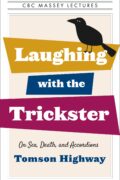 On Language |
In this chapter, Highway examines the Cree language as a cornerstone of Canadian cultural and linguistic identity. | Tomson Highway | 12 | 2022 | $1.20 Add |
|
From On Sex and Gender |
In this chapter, Highway examines sexuality, gender roles, and domestic violence in the Cree-Dene village of Brochet, northern Manitoba, during the mid-twentieth century. | Tomson Highway | 22 | 2022 | $2.20 Add |
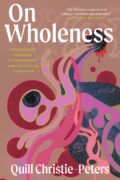 NEW! On WholenessAnishinaabe Pathways to Embodiment and Collective Liberation |
Through reflections on childbirth, parenting, creative practice, and expansive responsibility, Anishinaabe visual artist Quill Christie-Peters explores how reconnecting with the body can be an … | Quill Christie-Peters | 402 | 2025 | View |
|
From NEW! On Wholeness and Feeling GoodEmbodied pleasure and the intergenerational reclamation of bodies full and whole From: On Wholeness |
In this chapter, Christie-Peters traces how embodied pleasure functions as both spiritual communion and resistance to settler colonialism. | Quill Christie-Peters | 27 | 2025 | $2.70 Add |
|
From NEW! On Wholeness and WorldbuildingParenting with our whole bodies in order to build the worlds our children need From: On Wholeness |
In this chapter, Christie-Peters explores Anishinaabe parenting as a creative practice of worldbuilding. | Quill Christie-Peters | 29 | 2025 | $2.90 Add |
|
From NEW! Our wholeness will usher in the world we have been dreamingFrom: On Wholeness |
In this chapter, Christie-Peters concludes on their overall project, reflecting on their place in this world as an Anishinaabe visual artist. | Quill Christie-Peters | 10 | 2025 | $1.00 Add |
|
From 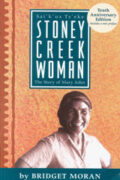 PrefaceFrom: Stoney Creek Woman |
In this preface, Moran explains the book’s origins, and how she recorded Elder Mary John’s life story at the request of Mary’s daughter Helen. | Bridget Moran | 6 | 1988 | $0.60 Add |
|
From PrologueFrom: Stoney Creek Woman |
This prologue outlines the history of the Stoney Creek Indian Reservation. | Bridget Moran | 2 | 1988 | $0.20 Add |
|
From 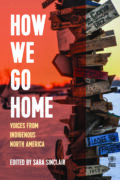 Robert Ornelas, New York City, Lipan Apache / Ysleta del Sur Pueblo“A part of the soul sickness for me was being ashamed. . . . What we were being taught about Indians was so minimal and so negative.” From: How We Go Home |
Robert Ornelas, who lives in New York City, and is of the Lipan Apache / Ysleta del Sur Pueblo, is a retired substance abuse counselor. He shares how he understood and felt about being native as … | Sara Sinclair | 17 | 2020 | $1.70 Add |
|
From 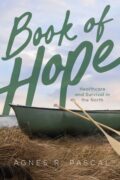 NEW! Ruth Wright, InuvikFrom: Book of Hope |
This chapter follows Ruth Wright of Inuvik, Northwest Territories, as she reflects on decades of family loss to cancer, beginning with her sister Ruby Ann in the 1970s and continuing through her … | Agnes R. Pascal | 6 | 2025 | $0.60 Add |
Stoney Creek WomanThe Story of Mary John |
The captivating story of Mary John (who passed away in 2004), a pioneering Carrier Native whose life on the Stoney Creek reserve in central BC is a capsule history of First Nations life from a … | Bridget Moran | 170 | 1988 | View |
|
From 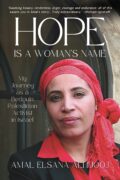 Tel a-SabaFrom: Hope Is a Woman's Name |
In this chapter, Alh’jooj traces her political awakening at a government-built Bedouin high school in Tel a-Saba, a planned Naqab town. | Amal Elsana Alh'jooj | 8 | 2024 | $0.80 Add |
|
From The Land of Olives and ThymeFrom: Hope Is a Woman's Name |
In this chapter, Alh’jooj traces the oral history of the Naqab Bedouin, affirming their presence in historic Palestine from the Bronze Age through the Ottoman and British periods. | Amal Elsana Alh'jooj | 12 | 2024 | $1.20 Add |
|
From NEW! The place before bodyFrom: On Wholeness |
In this chapter, Christie-Peters examines the Anishinaabe concept of the "great beyond," a formless realm where ancestors exist as living smoke before taking physical shape. | Quill Christie-Peters | 11 | 2025 | $1.10 Add |
|
From NEW! The shape of my bodyFrom: On Wholeness |
In this chapter, Christie-Peters examines how settler colonialism has impacted Anishinaabe bodies across generations. | Quill Christie-Peters | 26 | 2025 | $2.60 Add |
|
From Vera Styres, Six Nations of the Grand River, Mohawk/Tuscarora“I was a ‘scabby, dirty little Indian.’” From: How We Go Home |
Vera Styres is of the Six Nations of the Grand River and she is of Mohawk/Tuscarora descent. She is a retired social worker. She speaks of her childhood in residential schools, and of coming to … | Sara Sinclair | 20 | 2020 | $2.00 Add |