
Uncategorized
Showing 17–32 of 72 results
| Title & Subtitle | Abstract | Contributors | Pages | Year | Purchase |
|---|---|---|---|---|---|
|
From 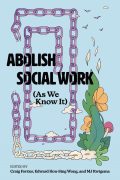 Chapter 11. Conversations on Decolonizing JusticeWith Members of It Starts With Us and No More Silence |
This excerpt outlines the epistemological tension between decolonization ideals and pragmatic reliance on carceral institutions for justice regarding Indigenous communities. It contrasts … | Audrey Huntley; Carol Lynne D'Arcangelis | 21 | 2024 | $2.10 Add |
|
From Chapter 12. Baby Bundle Project and Community Birth Work Journeys |
This document analyzes structural inequities in Indigenous child welfare, specifically how funding priorities conflate poverty with parental neglect rather than addressing housing scarcity. It … | Krysta Williams | 12 | 2024 | $1.20 Add |
|
From Chapter 13. Social Work’s Very Complicated Relationship with Indigenous Languages |
The text examines social work’s historical entanglement with colonial policies disrupting language transmission. It critiques institutional models that prioritize bureaucracy over … | Rochelle Allan | 15 | 2024 | $1.50 Add |
|
From Chapter 14. Toronto Indigenous Harm ReductionSolidarity with Indigenous Encampment Residents |
The text examines the organization’s formation during the pandemic, driven by institutional neglect and service closures within specific urban neighborhoods facing isolation. It analyzes … | Brianna Pitawanakwat Olson | 4 | 2024 | $0.40 Add |
|
From Chapter 15. Black Creek Community FarmMutual Aid, Abolition, and Food Justice in Jane and Finch |
The text identifies structural determinants like state planning that create food apartheid and health disparities in marginalized neighborhoods. It examines the historical transition toward … | Sabrina "Butterfly" Gopaul; Sam Tecle; Suzanne Narain | 12 | 2024 | $1.20 Add |
|
From Notes |
The document identifies three primary topics concerning social work reform. Firstly, it analyzes historical colonial entanglements involving state violence against racialized groups within … | Craig Fortier; Edward Hon-Sing Wong; MJ Rwigema | 28 | 2024 | $2.80 Add |
|
From Chapter 3. For Black Women, Health Care Is an Abolition Issue |
First, the chapter critiques carceral infrastructure embedded in healthcare, analyzing how punitive mechanisms specifically target Black women and queer individuals within marginalized … | Renée Nichole Ferguson | 12 | 2024 | $1.20 Add |
|
From Chapter 4. “Keep This Up and They’ll Be Pulling You from the Red”Young People Are Dying to Survive Winnipeg’s Child Welfare System |
This report examines systemic bias within Manitoba Child and Family Services, linking current surveillance practices to historical state-sanctioned violence against Indigenous and racialized … | Juvie | 16 | 2024 | $1.60 Add |
|
From Chapter 5. Not Criminally ResponsibleThe Fatal Intersection of the Mental Health and Justice Systems |
This text critiques forensic mental health institutions as carceral spaces prioritizing control over therapeutic healing. It addresses professional ethical compromises and legal mechanisms … | Carly Seltzer; Golta Shahidi; Lue Palmer | 13 | 2024 | $1.30 Add |
|
From Chapter 6. Shifting PraxisSocial Work and Community-Based Approaches to Abolition |
This academic overview outlines the theoretical shift from carceral systems toward community-based abolitionist organizing rooted in historical context and grassroots contributions. It examines … | Heather Bergen; Krystle Skeete | 11 | 2024 | $1.10 Add |
|
From Chapter 7. The Antitrafficking Movement Is Not AbolitionistHow Carceral Feminists and Social Workers Harm Migrant Sex Workers |
This text critiques antitrafficking discourse by exposing contradictions between feminist abolitionist rhetoric and actual reliance on policing and incarceration. It analyzes how colonial … | Elene Lan | 12 | 2024 | $1.20 Add |
|
From Chapter 8. A Masterpiece We Can Call AbolitionReflections from the Pages of Cell Count |
The primary focus integrates abolitionist political theory with social work methodologies, critiquing punitive correctional models that neglect root causes like systemic poverty and racism. … | Nolan Turcotte; Sena Hussain; Zakaria Amara | 12 | 2024 | $1.20 Add |
|
From Chapter 9. Social Work Abolition in Unsettling Times |
The text critiques professional social work as a mechanism for state surveillance and capitalist extraction within hierarchical structures. It proposes an abolitionist framework replacing … | Craig Fortier; Edward Hon-Sing Wong | 10 | 2024 | $1.00 Add |
|
From Chapter 10. The Only Good Social Worker Is a Criminal Social Worker |
The text critically interrogates professional identity regarding how roles reinforce state control rather than liberation for marginalized demographics. It defines abolitionism as a cultural … | Chanelle Gallant | 11 | 2024 | $1.10 Add |
|
From  ConclusionFrom: Someone To Talk To |
From Someone To Talk To: Care and Control of the Homeless | Tom C. Allen | 5 | 2000 | $0.50 Add |
|
From Context and Method: The Downtown Eastside of VancouverFrom: Someone To Talk To |
From Someone To Talk To: Care and Control of the Homeless | Tom C. Allen | 14 | 2000 | $1.40 Add |