
New Society Publishers
Showing 561–576 of 1070 results
| Title & Subtitle | Abstract | Contributors | Pages | Year | Purchase |
|---|---|---|---|---|---|
|
From  Of Systems and ProcessFrom: i-Minds, 2nd edition |
We want to teach children not only how to use technologies, but how to choose technologies, and how to make them. We also want to teach them the caveats including biological hijacking and … | Mari K Swingle | 24 | 2019 | $2.40 Add |
|
From  NEW! Offering and Tending to the Land |
This chapter describes the reciprocal relationship Indigenous cultures have traditionally cultivated with the land, presenting such relationships as a model for ecological protection and restoration. | Osprey Orielle Lake | 25 | 2024 | $2.50 Add |
|
From  On Being a BiophilistAn Injection of Nature Relatedness |
We need deep exploration of the tiniest ecosystems in the gut. We need far more detail on the interactions between our nerve cells and the immune system. We are talking about connectivity to life … | Alan C. Logan; Susan L. Prescott | 27 | 2017 | $2.70 Add |
|
From  On Nature’s Limits and the Human ConditionFive Axioms of Sustainability From: Peak Everything |
My aim in this chapter is to explore the history of the terms sustainable and sustainability, and their various published definitions, and then to offer a set of five axioms (self-evident truths) … | Richard Heinberg | 14 | 2010 | $1.40 Add |
|
From On Nature’s Limits and the Human ConditionParrots and Peoples From: Peak Everything |
People who live a civilized life are like birds in a cage. As long as we stay within well-defined social bounds (and assuming we are lucky enough to have been born in a wealthy parasitic society, … | Richard Heinberg | 17 | 2010 | $1.70 Add |
|
From On Nature’s Limits and the Human ConditionPopulation, Resources, and Human Idealism From: Peak Everything |
No steady rate of growth in population or resource consumption is sustainable. During the course of the lecture, he asks, “Well, what can we do about this? What makes the population problem … | Richard Heinberg | 12 | 2010 | $1.20 Add |
|
From On Technology, Agriculture, and the ArtsTools with a Life of Their Own From: Peak Everything |
In assessing and understanding technology and its effects on people and nature, it is at least as important to pay attention to the energy that drives our tools as to the tools themselves and the … | Richard Heinberg | 17 | 2010 | $1.70 Add |
|
From On Technology, Agriculture, and the ArtsFifty Million Farmers From: Peak Everything |
There are reasons to think that our current anomalous abundance of inexpensive food may be only temporary; if so, present and future generations may become acquainted with that old, formerly … | Richard Heinberg | 20 | 2010 | $2.00 Add |
|
From On Technology, Agriculture, and the Arts(post-) Hydrocarbon Aesthetics From: Peak Everything |
Will industrial production survive in the post-hydrocarbon era? The answer will of course depend on how much energy humans will have at their disposal. The total amount, as well as the per capita … | Richard Heinberg | 16 | 2010 | $1.60 Add |
|
From  One PlanetEcological Limits and Then What? From: Ecological Footprint |
Once we compare demand (footprint) with supply (biocapacity) it becomes clear which countries run ecological deficits. It begs the question – are ecological deficits an economic risk? Where are … | Bert Beyers; Mathis Wackernagel | 25 | 2019 | $2.50 Add |
|
From 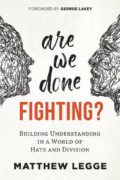 Oppressors and VictimsFrom: Are We Done Fighting? |
The author explores how narratives of oppressors and victims fit into dynamics of violence. He considers the surprising ways that our narratives which inform how we engage in conflict situations … | Matthew Legge | 21 | 2019 | $2.10 Add |
|
From 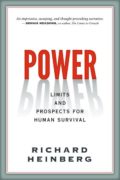 Optimum PowerSustaining Our Power Over Time From: Power |
This chapter makes the case that we humans are capable of controlling our thirst for power, and we have a long history of doing so. Moreover, that capacity is rooted in similar behavior expressed … | Richard Heinberg | 51 | 2021 | $5.10 Add |
|
From 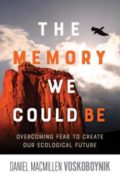 OriginsFrom: The Memory We Could Be |
To understand how we find ourselves in such a situation of ecological precarity requires delving into the past. But our intents are fraught from the start. Any attempt to retell human history is … | Daniel Macmillen Voskoboynik | 8 | 2018 | $0.80 Add |
|
From Our Future Our SelvesFrom: i-Minds, 2nd edition |
I want to close this book by coming full circle back to what I feel are our most urgent issues: First and foremost are our collective children; the next generations and how we individually and … | Mari K Swingle | 14 | 2019 | $1.40 Add |
|
From  Outdoor Risky Play in Nature-based TherapyFrom: Nature-Based Therapy |
The meaningful integration of environmental conditions and activity choices creates the milieu. Comfort with changing weather conditions, spending time in a forest, and getting dirty, wet, or … | David Segal; Kathryn Rose; Nevin Harper | 19 | 2019 | $1.90 Add |
|
From Outdoor Therapies:A Choice of Paths to Follow From: Nature-Based Therapy |
We have combined what we have found works best in our practice, for our clients and contexts, nothing more. As readers, you may take what you need, leave what you don’t, and hopefully are … | David Segal; Kathryn Rose; Nevin Harper | 20 | 2019 | $2.00 Add |