
Institutional
Showing 161–176 of 216 results
| Title & Subtitle | Abstract | Contributors | Pages | Year | Purchase |
|---|---|---|---|---|---|
|
From  NEW! Section IV: Gaining Commitment and Institutionalizing ChangeFrom: Inside Out |
Section IV contains chapters 18. Bring Decision-Makers on Board, 19. Establish an Equity Team to Maintain the Work, and 20. Determine Your Organization’s Stage of Multicultural Development. … | Caprice D. Hollins | 44 | 2022 | $4.40 Add |
|
From NEW! Section V: Sustaining Yourself While Maintaining Your CommitmentFrom: Inside Out |
Section V contains the chapter 21. Radical Self-Care. Topics discussed include burnout and fatigue, othering and the “us versus them” mentality, the preservation of institutional and … | Caprice D. Hollins | 8 | 2022 | $0.80 Add |
|
From 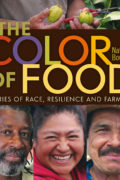 Seeds of ResilienceFrom: The Color of Food |
Portrait 1: Katrina to Chickens. Yasin & Elaine Muhaimin, Yard Bird Farm Portrait 2: Transitioning to Sovereignty. Luis Castañeda, SOLAR Farm Portrait 3: Bucking Dependence. Renard … | Natasha Bowens | 34 | 2015 | $3.40 Add |
|
From  NEW! Sex Worker Justice—by Us, for UsToronto Sex Workers Resisting Carceral Violence |
In Sex Worker Justice—by Us, for Us authors Ellie Ade Kur and Jenny Duffy on behalf of Maggie’s Toronto Sex Workers Action project explore how sex workers in Toronto are resisting … | Ellie Ade Kur; Jenny Duffy | 17 | 2022 | $1.70 Add |
|
From  Sleeping Car Porters and Uncle BenFrom: Uncle |
This chapter examines railway sleeping cars, the Black men who served as porters to tourists on the rails, and how these men were forced to conform to the Uncle Tom stereotype. | Cheryl Thompson | 8 | 2021 | $0.80 Add |
|
From Song of the South and Uncle Remus’s ReturnFrom: Uncle |
This chapter explores Song of the South, a 1944 Disney movie that featured Uncle Remus. | Cheryl Thompson | 12 | 2021 | $1.20 Add |
|
From  South Pacific, Miss Saigon, Soft Power and MeFrom: Bigotry on Broadway |
This author recounts her experiences and perceptions of Anti-Asian bigotry in theatre/Broadway. | Aimee Phan | 10 | 2021 | $1.00 Add |
|
From  NEW! Still Not FreedomFrom: Abolitionist Intimacies |
Chapter 8 serves as the conclusion to the book, reflecting on the types of desire, acts of kindness and humanity, Black capitalism, and includes the poems "To All My People Doing Time" … | El Jones | 17 | 2022 | $1.70 Add |
|
From  Systemic DiscriminationPolice and Race |
In this chapter, the author outline the "broken windows" theory of policing, and how this has had disproportionate impacts on racialized people. | Christopher J. Williams; John Sewell | 45 | 2021 | $4.50 Add |
|
From  Temporary Labor Migration and the New BracerosFrom: Border and Rule |
This chapter describes the working conditions and marginalization of migrant labourers, and the trade policies that channel migrant labour. | Harsha Walia | 15 | 2021 | $1.50 Add |
|
From The 1980s, Bill Cosby, and Smokescreen TomsFrom: Uncle |
This chapter examines the role of Black conservatives in the web of free-market capitalism, focusing especially on the ideology of The Cosby Show. | Cheryl Thompson | 14 | 2021 | $1.40 Add |
|
From The Anti-TomFrom: Uncle |
This chapter explores the socio-economic context in which Black communities began to police the boundaries of racial loyalty. It was at this time that "Uncle Tom" became the label used … | Cheryl Thompson | 13 | 2021 | $1.30 Add |
|
From The Book of Mormon Is Racist—Why Isn’t Anyone Talking about It?From: Bigotry on Broadway |
This chapter outlines the many racist aspects of The Book of Mormon, as perceived by the author. | Claire J. Harris | 5 | 2021 | $0.50 Add |
The Color of FoodStories of Race, Resilience and Farming |
Imagine the typical American farmer. Many people visualize sun-roughened skin, faded overalls, and calloused hands-hands that are usually white. While there’s no doubt the growing trend of … | 242 | View | ||
 The Colour of JusticePolicing Race in Canada |
The colour of justice in Canada is largely driven by stereotypical assumptions about crime and those who commit it. Over the last few years, the use of race, ethnicity, and religion as indicators … | David M. Tanovich | 275 | 2006 | View |